
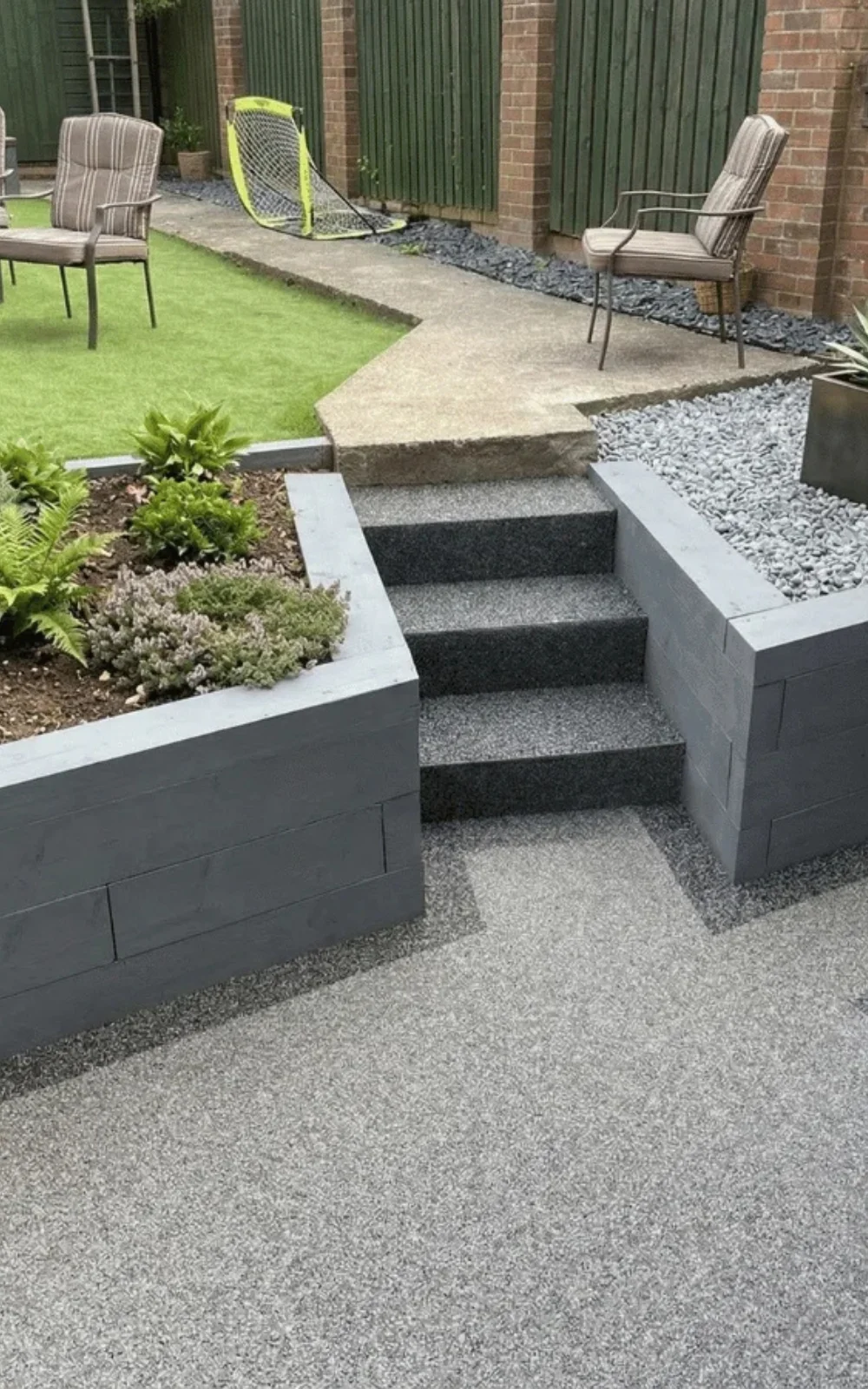
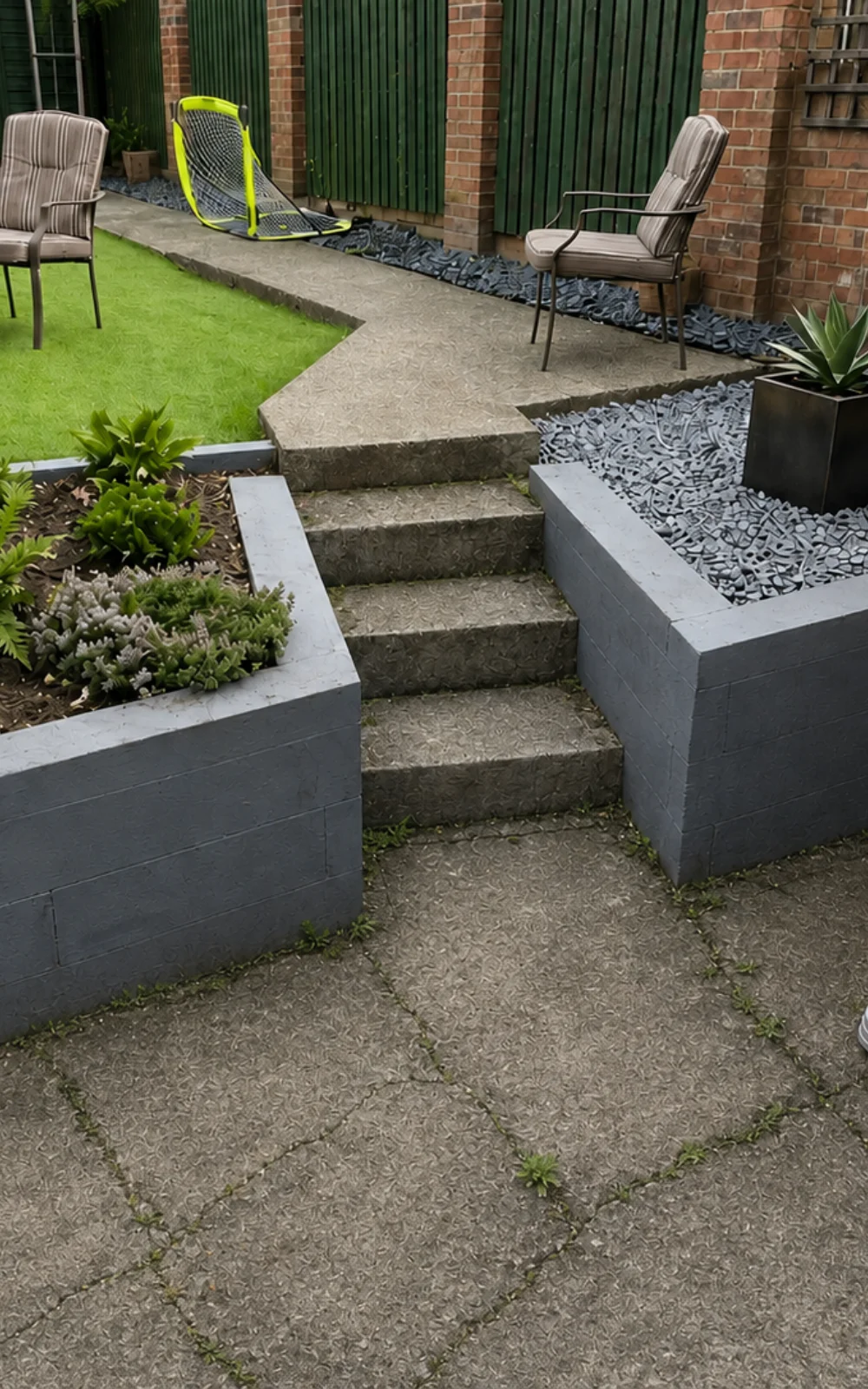
 After
Before
After
Before
Create a continuous natural-stone finish over a qualifying path base. We assess stability, levels, drainage, transitions and access before recommending the resurfacing scope.
A stable concrete path may be suitable for a resin-bound overlay. Suitable asphalt may also qualify, while paved paths need closer assessment because both the pavers and the supporting base must be stable.
Whether the path leads to the front door, runs along the side of the home, forms a garden walkway or connects outdoor areas, we assess cracking and movement, width and access, gradients and drainage, edges, thresholds and nearby landscaping before recommending a system.
When the base qualifies, it can remain in place instead of being completely rebuilt. Structural repairs, new base construction and standalone resin repairs are outside this service. Paths smaller than 20 m² can still be considered, but the minimum project charge is based on 20 m². Combining another suitable area can make better use of that minimum.
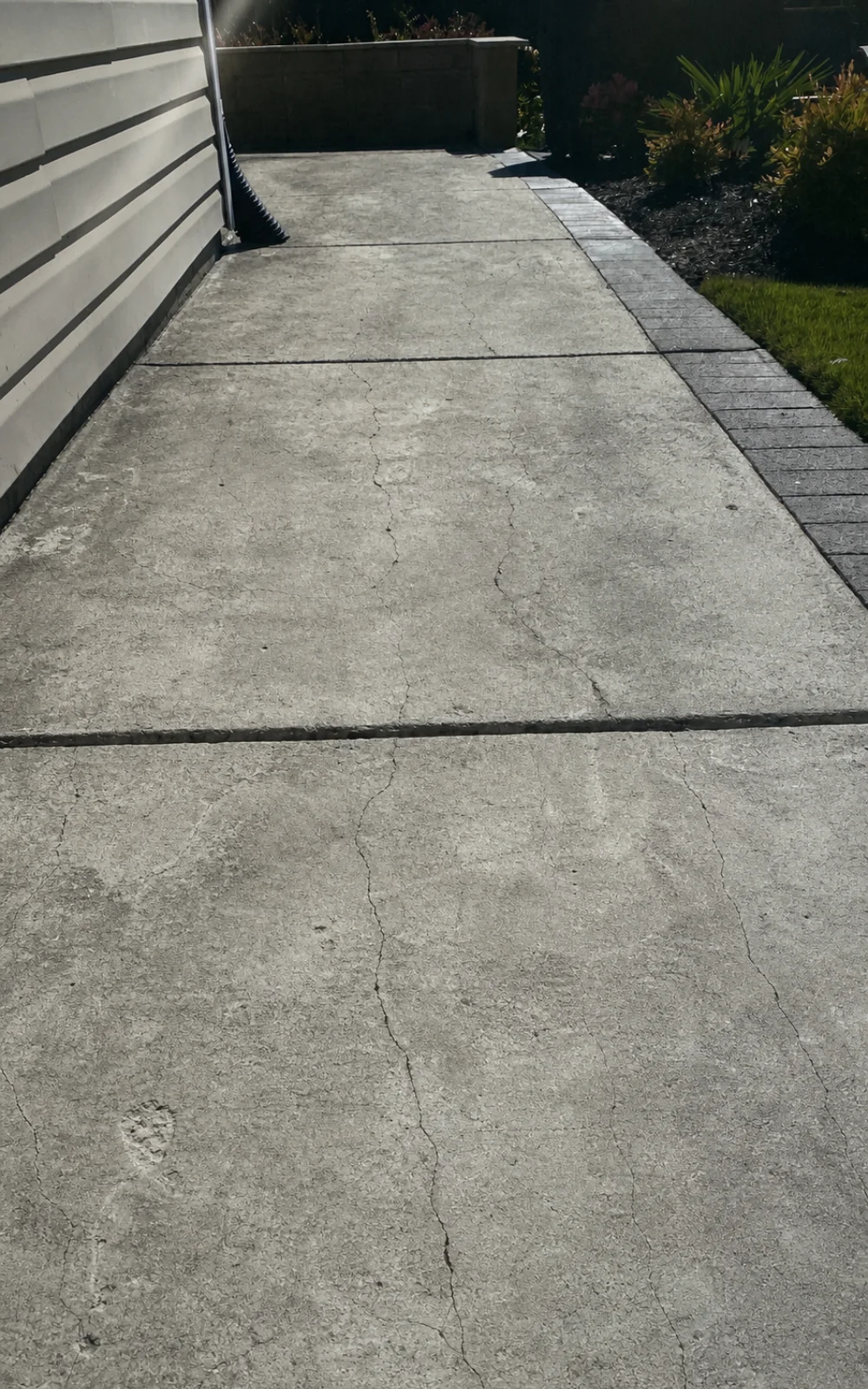
Before & After
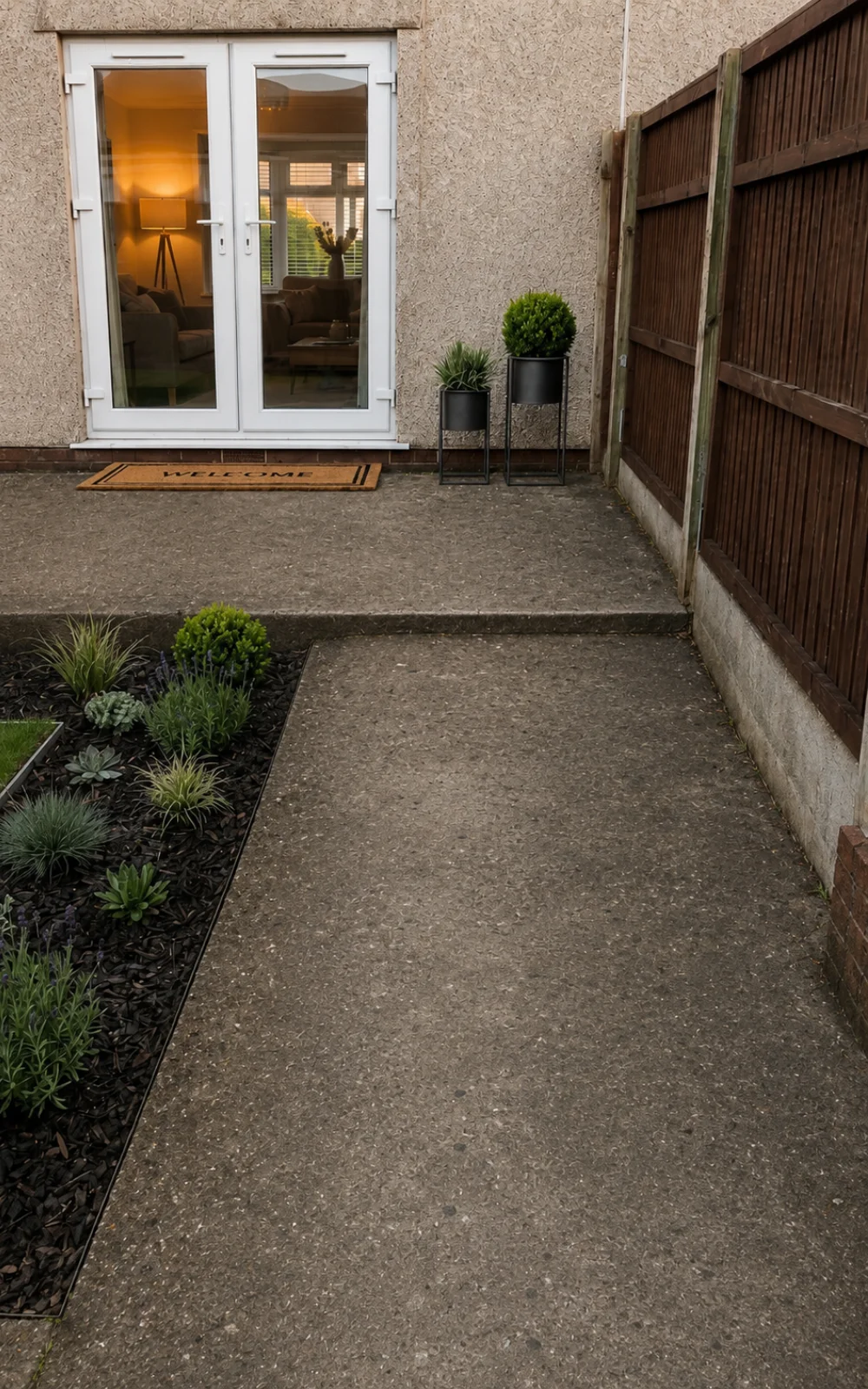
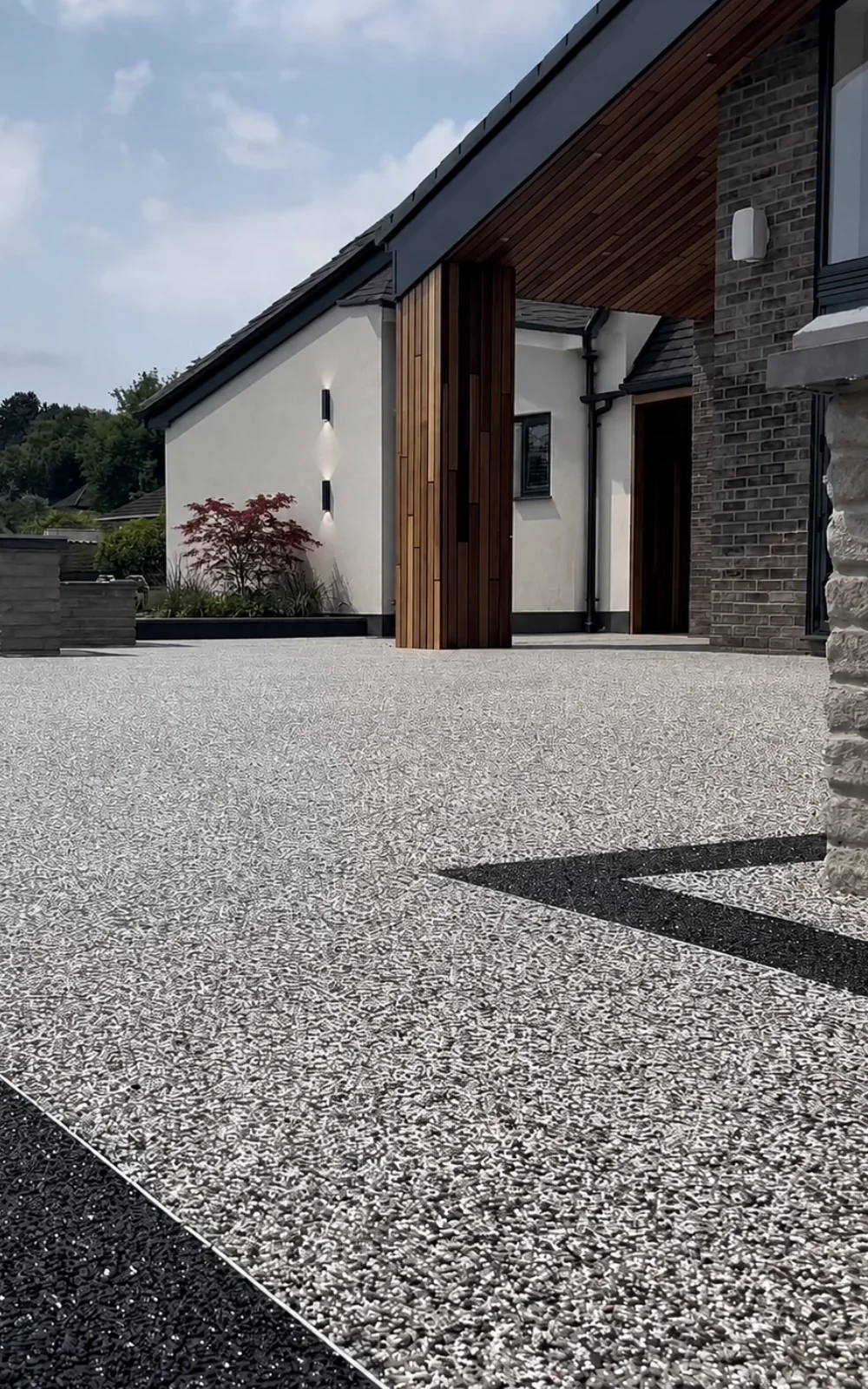
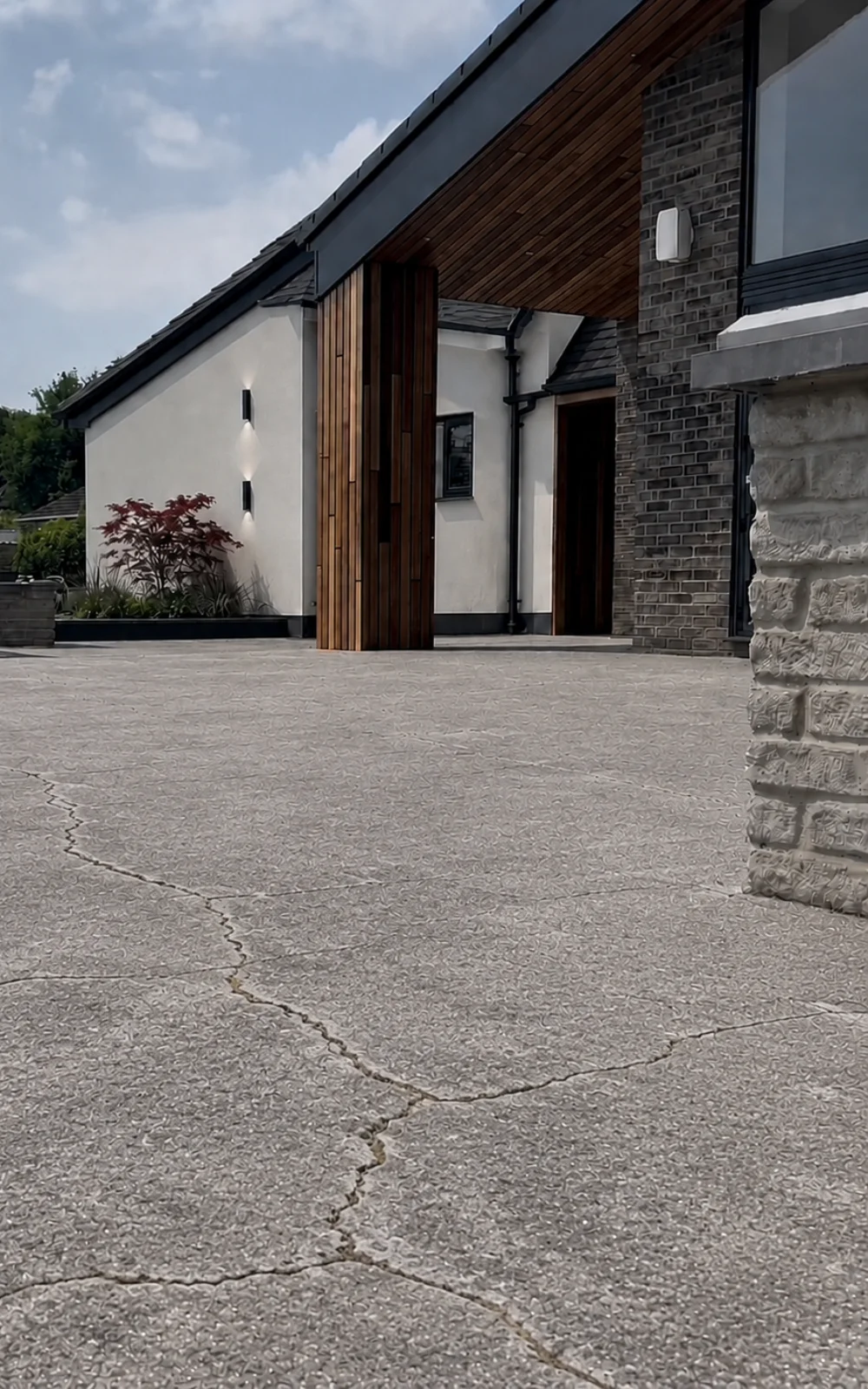
See how tired paths and walkways can be renewed with a cleaner, more cohesive resin-bound finish.
After
Before
 After
Before
After
Before
 After
Before
After
Before
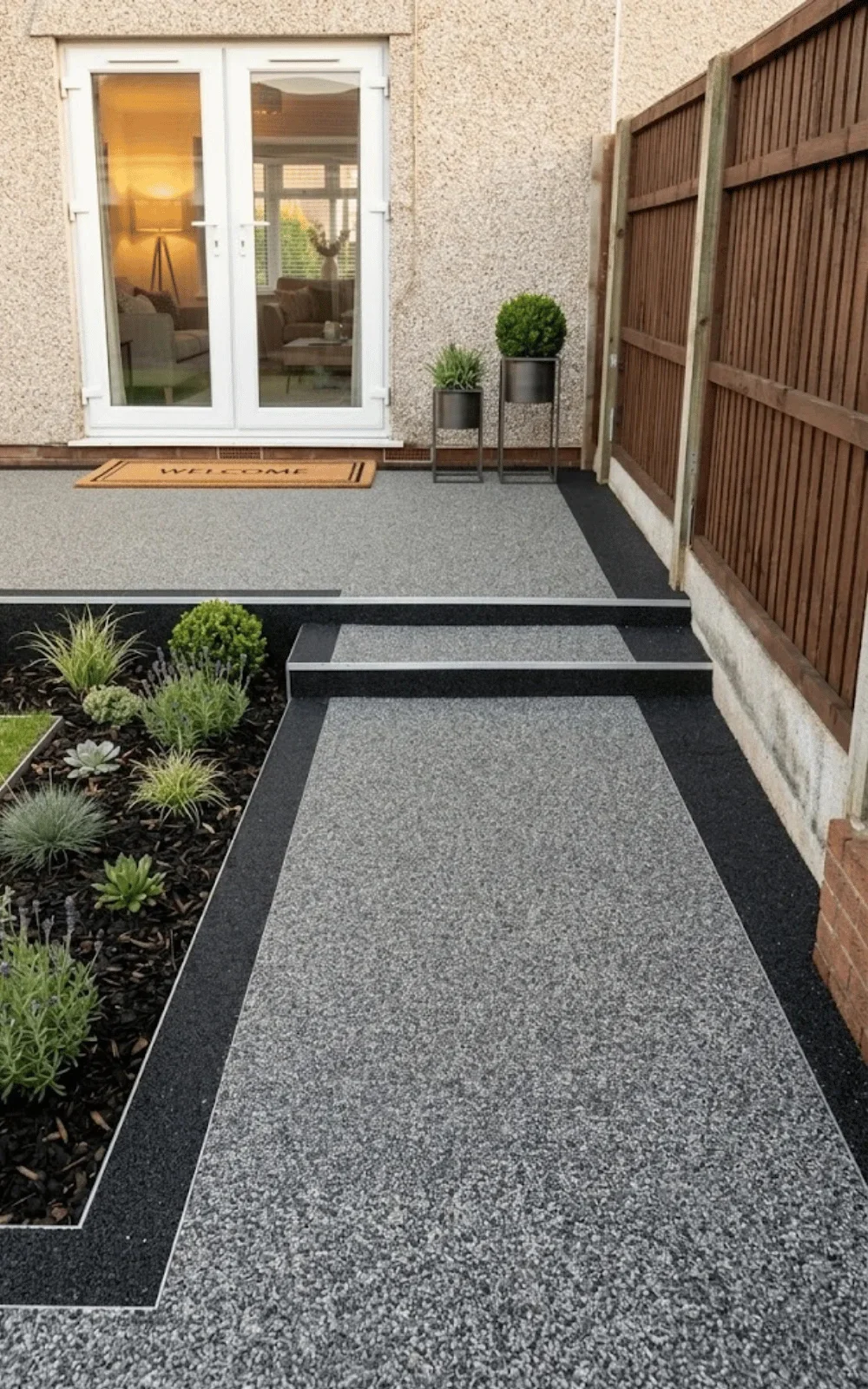
The same walkway, resurfaced over the existing base for a cleaner, premium finish.Tap the photos to reveal what it looked like before.
Resin-bound resurfacing gives suitable front paths, side access routes and garden walkways a consistent natural-aggregate finish. The blend and detailing can be planned around existing curves, gates, garden edges and transitions, so the finished path complements both the home and surrounding landscape.
Our Process
From the first conversation to handover, the process covers suitability, design, written scope, scheduling, installation and cure guidance.
We discuss your project, review the existing surface, and understand the finish you want.
We recommend the right system, colour, and details, then provide a clear written quote.
The surface is prepared and installed to the agreed scope, followed by project-specific cure and handover guidance.
Colour Selection
Choose a blend that connects naturally with your home, garden beds, edging, and surrounding outdoor surfaces.
Explore all 29 stone blends and shortlist the colours that best suit your walkway. Browse the full colour gallery.
Social Proof
Customer reviews displayed below.

Jack Perchard
Fantastic experience from start to finish. Liam was upfront about everything, pricing, timeline, and what to expect. The quote was accurate, and there were no hidden extras. The team were punctual, professional, and incredibly tidy. They cleaned up at the end of each day, and you'd barely know they'd been here. The driveway looks incredible, the colour matched the samples exactly. Completed in under two days. Highly recommend.

Asher Mather-Neill
This whole process was seamless from start to finish. Communication was great from the Gorilla Surfaces team, pricing was excellent, and the work was started and finished in the timeline given. We absolutely love our new resurfaced pool area and walkways, and highly recommend GS for any resurfacing job. We went from dingy to fantastic in a couple of days, thanks to Ben and Liam!

Jamilla Starr
Communication was excellent. Ben from Gorilla was very insightful when he first came, he provided us with a lot of information, and made it really easy to pick the best path forward 😊. The actual installation took around 2 days, which was much quicker than we had expected. The workers were considerate and clean. Couldn't be happier with the new resin-bound drive.

Casey Mifsud
Really happy with how our front path and porch turned out. Went with Gorilla Surfaces and glad we did. Ben was easy to deal with from start to finish, and his team did a really clean job. Looks exactly like the colour sample we picked. Good communication, showed up on time, left everything tidy. Would definitely use again

Bryce Summerton
From the quote to clean up everything was clear and on time. The Gorilla team were very supportive with their feedback and recommendations. Very knowledgeable crew! The new finish has completely lifted the street appeal of our home.
Why Resin-Bound
A practical comparison of a resin-bound overlay with conventional new concrete, standard pavers and exposed-aggregate concrete.
| Feature | Resin-Bound Overlay system | Concrete New slab | Pavers Standard unit paving | Exposed Aggregate Concrete slab |
|---|---|---|---|---|
| Retains a qualifying concrete or asphalt base | Yes | No | No | No |
| Joint-minimised wearing surface | Yes | No | No | No |
| Porous wearing course | Yes | No | No | No |
| Thin, hand-trowelled overlay system | Yes | No | No | No |
| Visible natural-stone aggregate finish | Yes | No | No | Yes |
| Follows curves without cutting paving units | Yes | Yes | No | Yes |
| Individual surface units can be lifted and replaced | No | No | Yes | No |
| Avoids a new concrete-slab cure cycle | Yes | No | Yes | No |
High-level comparison only. Resin-bound refers to an overlay over a suitable, stable concrete or asphalt base. The other columns describe conventional new installations; specialist concrete overlays and permeable paver systems can differ. A porous resin-bound surface does not make an impermeable base fully permeable. Final suitability depends on the complete build-up, drainage, intended use and site conditions.
FAQs
Yes, when the concrete remains stable and suitable for an overlay. We review cracking, movement, levels, drainage, edges and access before confirming the project.
Stable asphalt can qualify after assessment. Pavers are considered selectively because both the pavers and the base beneath them need to be stable enough for the resurfacing system.
Potentially. Width, access, drainage, edges and adjoining walls or thresholds all affect whether the route can be prepared and installed correctly. Photos are useful for the first check.
It depends on the gradient, existing base, drainage, edge restraint and how the route will be used. We assess the individual path rather than treating every slope as suitable.
The finish has fewer joints than individual pavers, but it is not weed-free. Seeds can settle in surface debris and grow if organic material builds up, so routine sweeping and cleaning still matter.
The resin-bound finish itself is porous. The complete path's drainage depends on the existing base, falls, outlets and site design. An overlay over ordinary concrete is not automatically fully permeable.
As an initial budget guide, straightforward qualifying pathway resurfacing may fall around $172–$200 per m². Final pricing depends on the site assessment, total area, base condition, preparation, access, edges and finish. A minimum project charge based on 20 m² applies.
It may still be considered, but a minimum project charge based on 20 m² applies. Combining another suitable surface at the property may improve overall project value.
Keep people off for at least 24 hours, or longer if advised. Temperature, moisture, weather and project conditions affect curing, so follow the handover instructions for your installation.
No. Gorilla Surfaces provides installed resin-bound resurfacing over qualifying existing bases. Standalone repairs, third-party resin repairs, DIY kits and materials-only supply are outside the current service.
The finished layer is specified after we assess the existing base, path width, gradients, drainage, edges, thresholds and intended foot traffic. The required build-up and detailing are confirmed in the written quote rather than assumed from one standard thickness.
Please fill out the form below and we will get back to you as soon as possible.
Prefer to call? +61 488 696 556