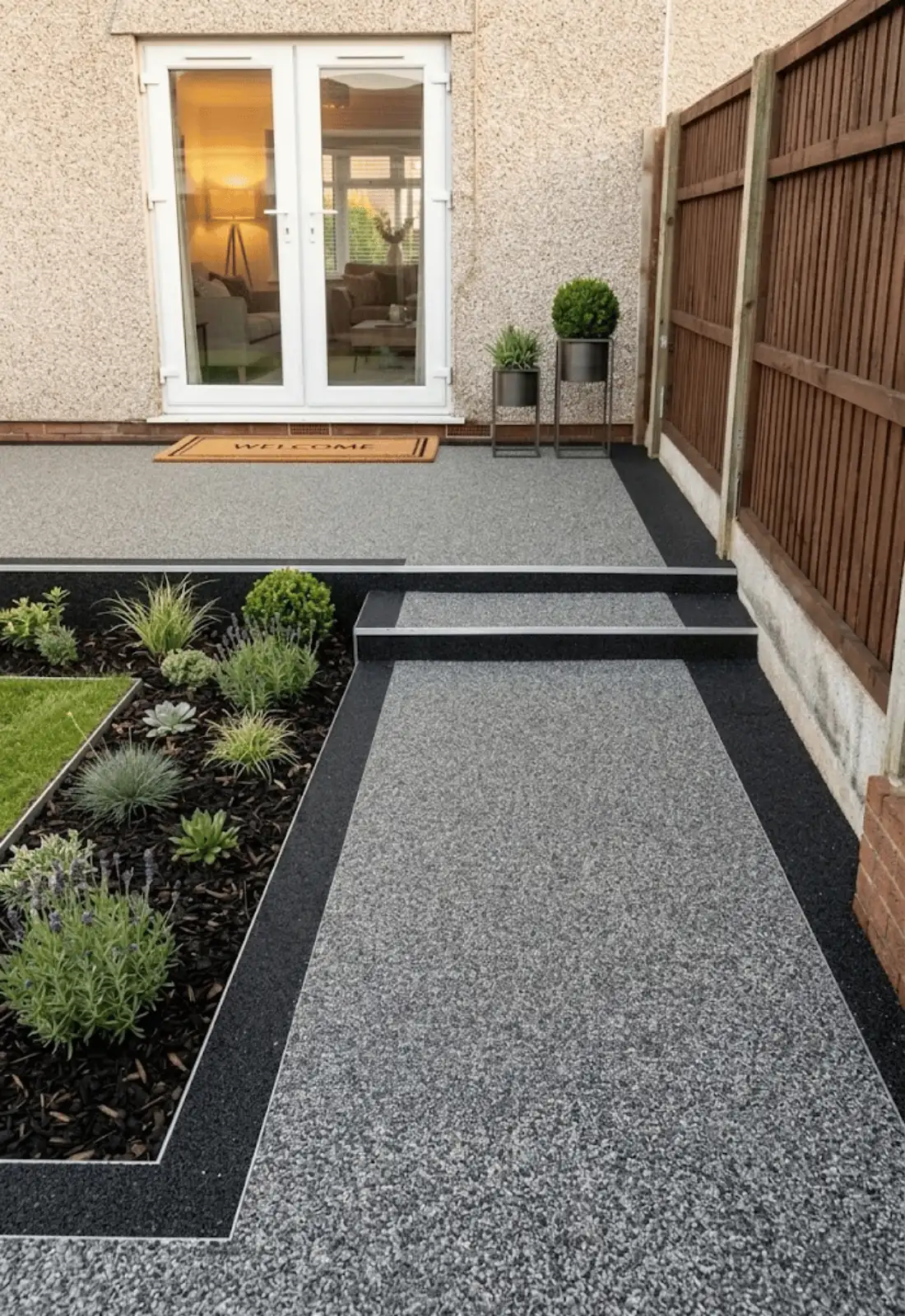
How do you plan pathways that feel natural to walk?
The best pathways follow actual movement patterns rather than forcing new ones. Observe how people already move between entry, garage, garden, and entertaining spaces, then design resurfacing to support those routes with clear lines and well-defined transitions.
If a path needs to carry bins, prams, or frequent service access, treat width and edge stability as non-negotiable. Visual style should support function, not replace it.
Which pathway ideas improve both look and usability?
- Use consistent edging to visually anchor winding paths.
- Keep main circulation routes wider than occasional access routes.
- Introduce subtle colour contrast near steps and level changes.
- Connect front and rear pathways with related tones for continuity.
- Add low-level lighting for night visibility without glare.
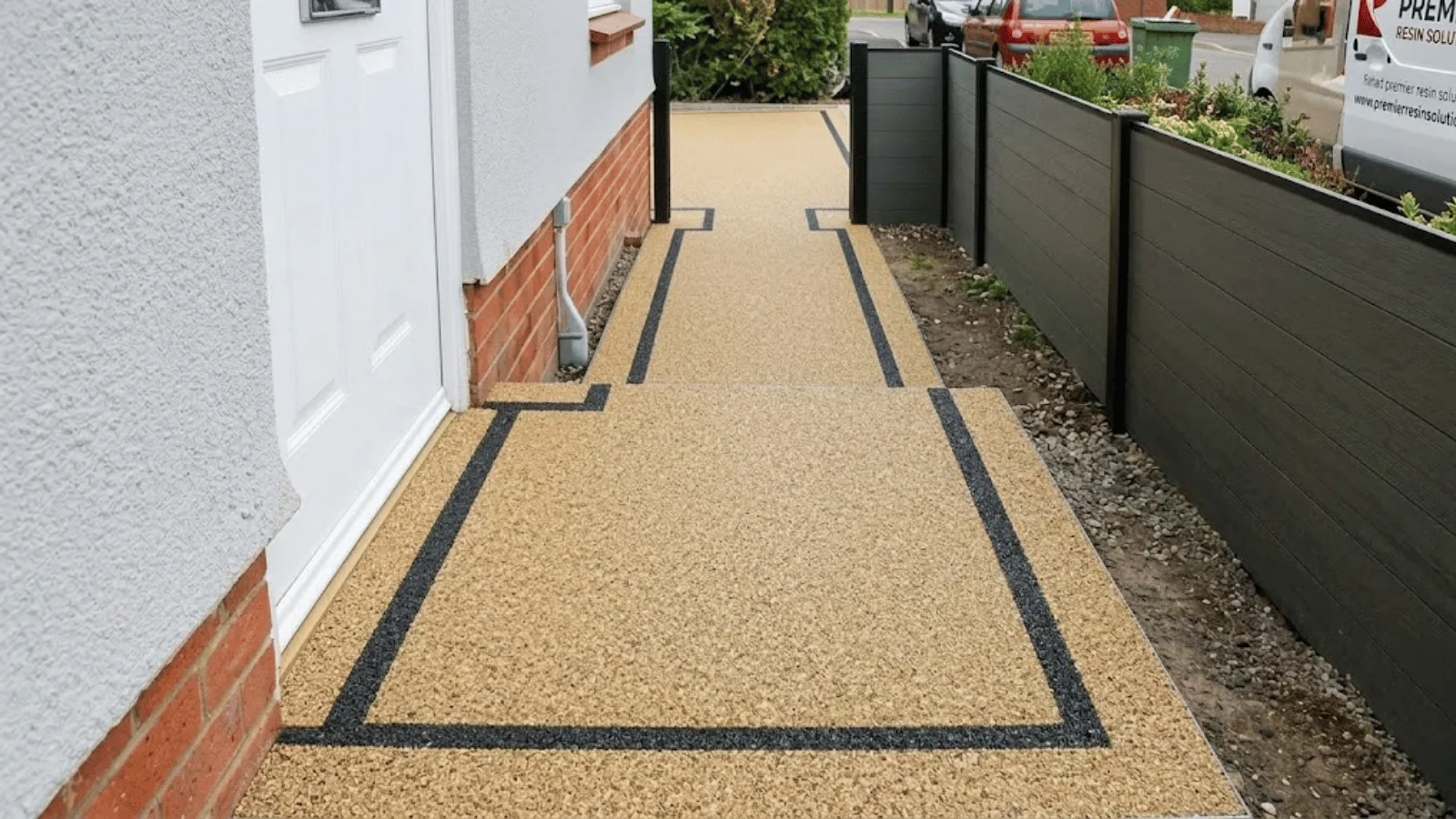
How should joints, drainage and routine care be planned?
A resin-bound finish has fewer joints than individual pavers, but it is not weed-free. Airborne seeds can grow where organic debris accumulates, so sweeping and routine cleaning still matter.
The surface layer is porous, while complete drainage depends on the base, falls and outlets. Plan accessible drainage points, avoid debris traps and follow the written care guidance for the installed finish.
If runoff is an issue in your yard, pair this article with our permeable pathway guide.
Frequently Asked Questions
Should front and rear pathways use the same finish?
Usually yes, or closely related tones, so the property feels visually connected.
How wide should a garden pathway be?
There is no single width for every property. Intended users, gates, walls, gradient, access and any formal accessibility requirements should be confirmed during design.