
What does a porous resin-bound surface mean?
Connected voids allow water to pass through the resin-bound finish. What happens next depends on the base, sub-base, falls, outlets and surrounding site design.
Gorilla Surfaces normally resurfaces suitable existing hard bases and does not construct a new permeable sub-base. An overlay on ordinary concrete should not be described as fully permeable.
When can the complete pathway be permeable?
A complete permeable system requires a porous base and sub-base designed with a suitable route for water. That is a project-specific civil and drainage question, not a property of the surface layer alone.
For a resurfacing project, assess the existing base, levels, falls, thresholds, outlets and surrounding ground before deciding whether the porous finish contributes to the site plan.
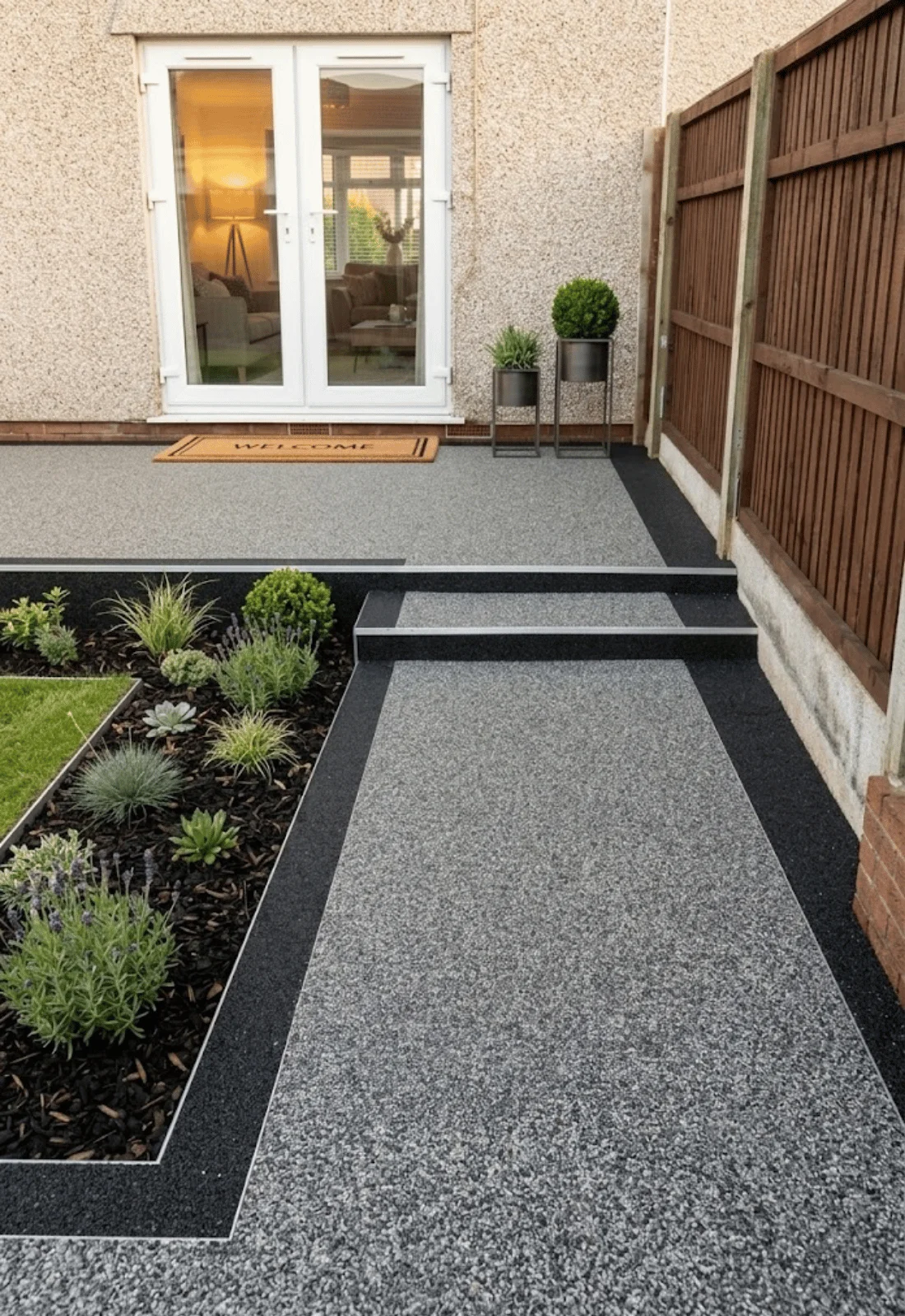
What can the porous surface not fix on its own?
They cannot solve major site fall issues, blocked stormwater systems, or structural base failure. If water has nowhere to go after passing through the surface, ponding problems can still occur.
That is why site assessment should include both surface design and surrounding drainage points. The porous finish can contribute to a drainage design, but it does not replace a site-specific drainage assessment. For broader South Australian stormwater context, Water Sensitive SA publishes useful WSUD resources for councils, designers and property teams.
How do you maintain the porous surface layer?
Keep debris and sediment from accumulating on the finish and keep visible outlets clear. Follow the care guidance supplied for the installed surface; this does not guarantee that the complete drainage system will remain unobstructed.
For broader outdoor care, combine this with our maintenance checklist and inspect drainage points after storms.

Frequently Asked Questions
Does a porous resin-bound finish solve runoff problems?
No. The finish lets water pass through, but complete drainage depends on the base, sub-base, falls, outlets and site design.
Is an overlay over ordinary concrete fully permeable?
No. Ordinary concrete is not a porous base, so the complete overlay system should not be called fully permeable.
Does Gorilla Surfaces build new permeable bases?
No. Gorilla Surfaces provides resin-bound resurfacing over qualifying existing hard bases. New base construction and major civil or drainage works are outside its service.