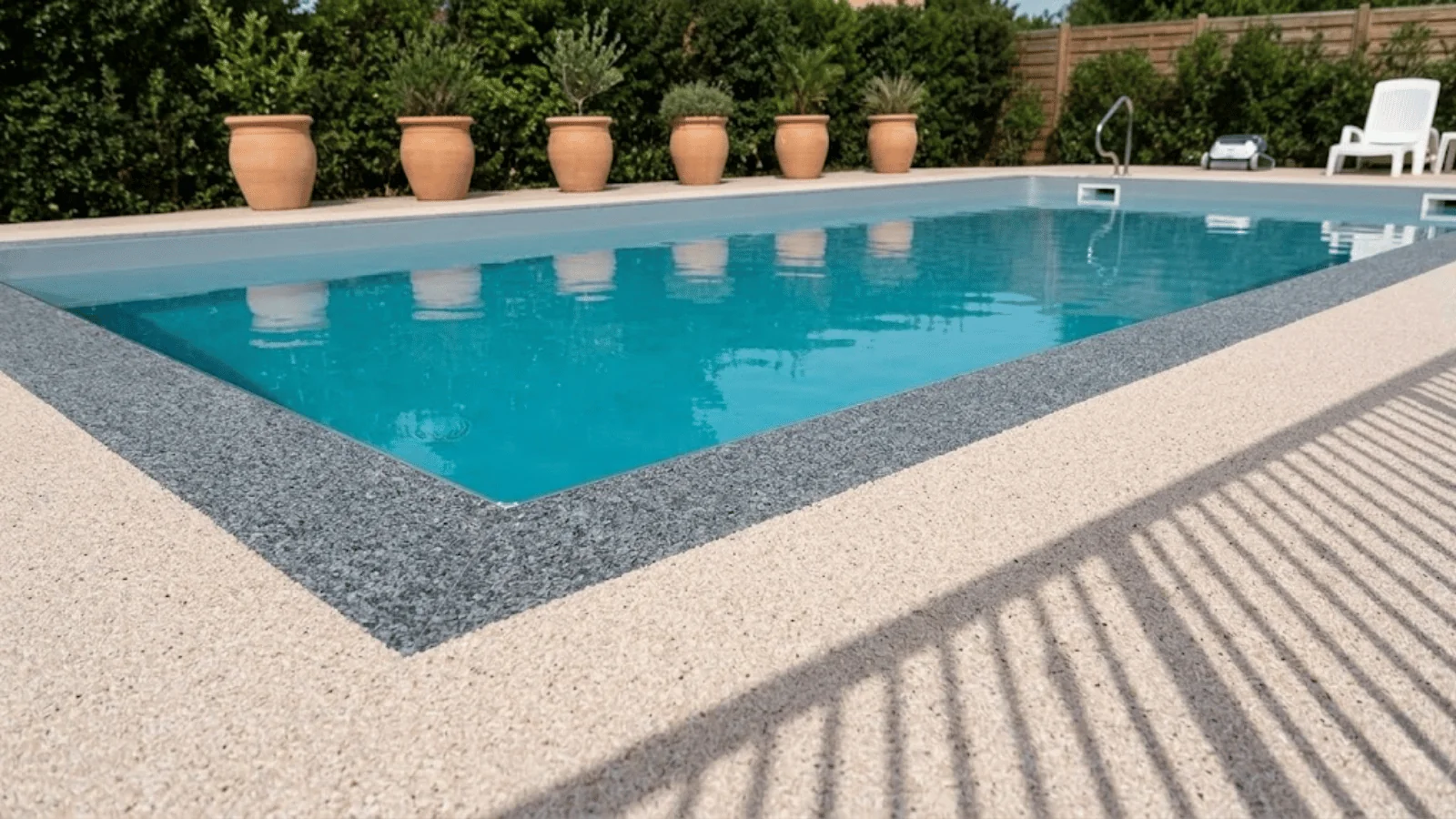
What should you assess before choosing a pool surround?
Start with the existing base, levels, falls, drainage, edges, thresholds and how the area is used. No outdoor pool surface is non-slip in every condition, and no specific AS/NZS classification should be assumed without a relevant test report.
Review entries, ladder exits, level changes and transitions between wet and dry zones. Texture is one factor; contamination, cleaning and water movement also affect performance.
Wet-use assessment checklist for pool surrounds
- Ask what wet-use evidence supports the proposed finish.
- Confirm falls, outlets and water movement around steps and thresholds.
- Compare physical colour samples; surface temperature varies with colour, sun and conditions.
- Review level changes, edges and adjoining surfaces.
- Understand the routine cleaning and maintenance guidance.
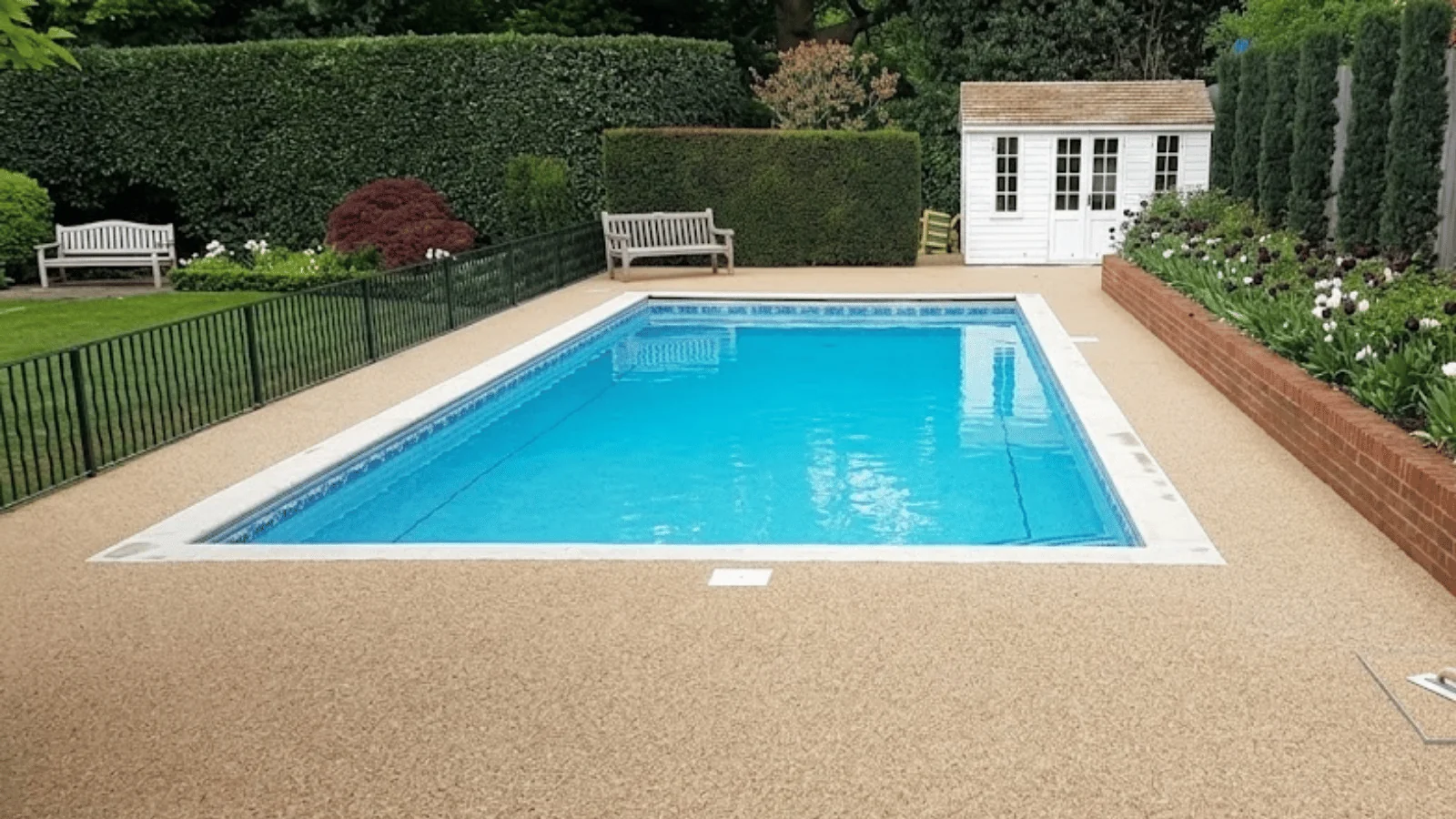
Can resin-bound resurfacing suit an existing pool surround?
It may, when existing concrete or asphalt is stable and suitable for an overlay after assessment. The aggregate finish has texture, but wet performance still depends on finish selection, installation, drainage, contamination and maintenance.
Water can pass through the porous surface layer; the complete area’s drainage still depends on the existing base, falls, outlets and site design. Our full materials comparison breaks down those trade-offs in detail.
Frequently Asked Questions
What should I check first when assessing a pool surround?
Start with the existing base, levels, falls, outlets, edges and transitions, then ask what wet-use evidence supports the proposed finish. Contamination, cleaning and how the area is used also affect performance.
What affects pool-surround surface temperature?
Colour, material composition, direct sun, shade, weather and time of day all affect surface temperature. Compare physical samples and the site's exposure; no blend or material should be assumed to be universally cooler underfoot.