A pool surround is not just a visual decision. The proposed finish, base, levels, falls, outlets, contamination and cleaning routine all affect how it performs in wet use. Surface temperature also varies with colour, direct sun, shade and weather.
Many homeowners narrow their options to four categories: resin-bound, concrete, exposed aggregate, and pavers. Each can work, but each has trade-offs. The right choice depends on how the space is used, whether children or older family members use the area, and how much maintenance you are prepared to handle.
If you are still deciding on overall pool-surface scope, review our pool surround resurfacing service page first.
How should wet-use performance be compared?
No outdoor surface is non-slip in every condition. Compare the evidence for the exact finish, then consider slope, drainage, contamination, cleaning and how people move between the pool, steps, paths and entertaining areas.
Resin-bound has a textured aggregate finish and fewer joints than unit paving. Paver levels can change if the supporting structure moves. Concrete and exposed aggregate vary by texture, stone profile, sealer and condition. None of those descriptions is a substitute for relevant wet-use evidence.
Whatever option you choose, slip performance should be assessed with slope, drainage, and cleaning routine in mind. Even a high-grip material can underperform if water pools consistently in one zone. For general household pool safety context, Royal Life Saving Australia is a useful starting point.
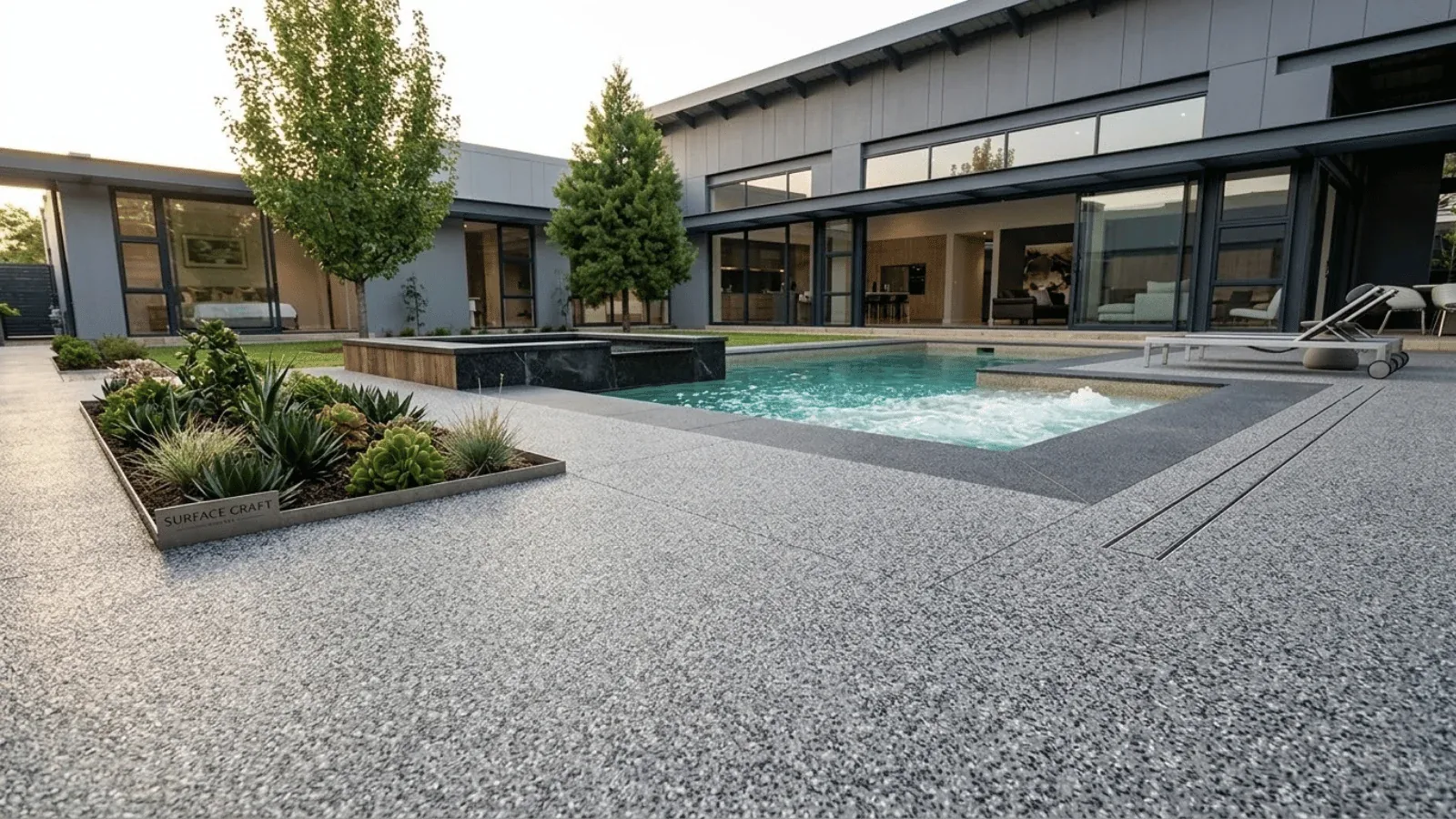
What affects surface temperature in Adelaide summers?
Colour, material composition, direct sun, shade, wind, weather and time of day all influence surface temperature. Gorilla Surfaces does not claim that one pool-surround material or colour is universally cooler underfoot.
Resin-bound is available in a range of aggregate colours, while concrete, exposed aggregate and pavers also offer light and dark options. Compare physical samples in conditions relevant to the site and consider shade where barefoot use is important.
Colour selection should also account for glare, surrounding finishes and natural aggregate variation rather than being treated as a temperature guarantee.
How do installation timeframes compare?
Where an existing concrete or asphalt base is stable and suitable, resin-bound resurfacing may retain that base after preparation. A paver rebuild or full concrete replacement has a different removal, construction and curing scope.
Program length matters when your pool area is a primary family zone. Even a few extra days of restricted access can be disruptive during warmer months. Ask installers for clear timeline assumptions, including weather contingencies and curing restrictions.
For larger properties or tight access sites, staged delivery can reduce disruption. We cover sequencing strategies in our staging and disruption planning guide which also applies to complex residential layouts.
| Material | Wet-use considerations | Temperature considerations | Routine care |
|---|---|---|---|
| Resin-bound | Textured aggregate finish; evidence and site conditions still need assessment | Varies with blend, sun, shade and weather | Cleaning plus prompt removal of contamination and organic buildup |
| Exposed aggregate | Varies with stone profile, sealer, contamination and condition | Varies by stone and colour | Cleaning, staining and any sealer requirements depend on the finish |
| Concrete | Varies by finish and sealer | Varies with colour, sun, shade and weather | Cleaning plus monitoring of joints, cracks and any applied finish |
| Pavers | Varies by unit texture, level, joints, contamination and condition | Varies by product, colour, sun and shade | Cleaning plus attention to joints, weeds or settled units where present |
How should family needs influence material choice?
Family needs change the assessment. Consider the evidence for wet use, how the selected texture feels underfoot, visible edge contrast, level changes and the routes people take between the water, seating, paths and doors.
Think beyond the pool edge itself. If users move quickly between water, patio seating, side paths, and back doors, your surround material should perform consistently across those connected spaces. Mixed surfaces with different grip or level behavior can create avoidable risk points.
If multi-generational safety is a priority, include night visibility and edge contrast in your scope. Subtle design adjustments often deliver better outcomes than relying only on a single \"non-slip\" label.
How do maintenance requirements differ?
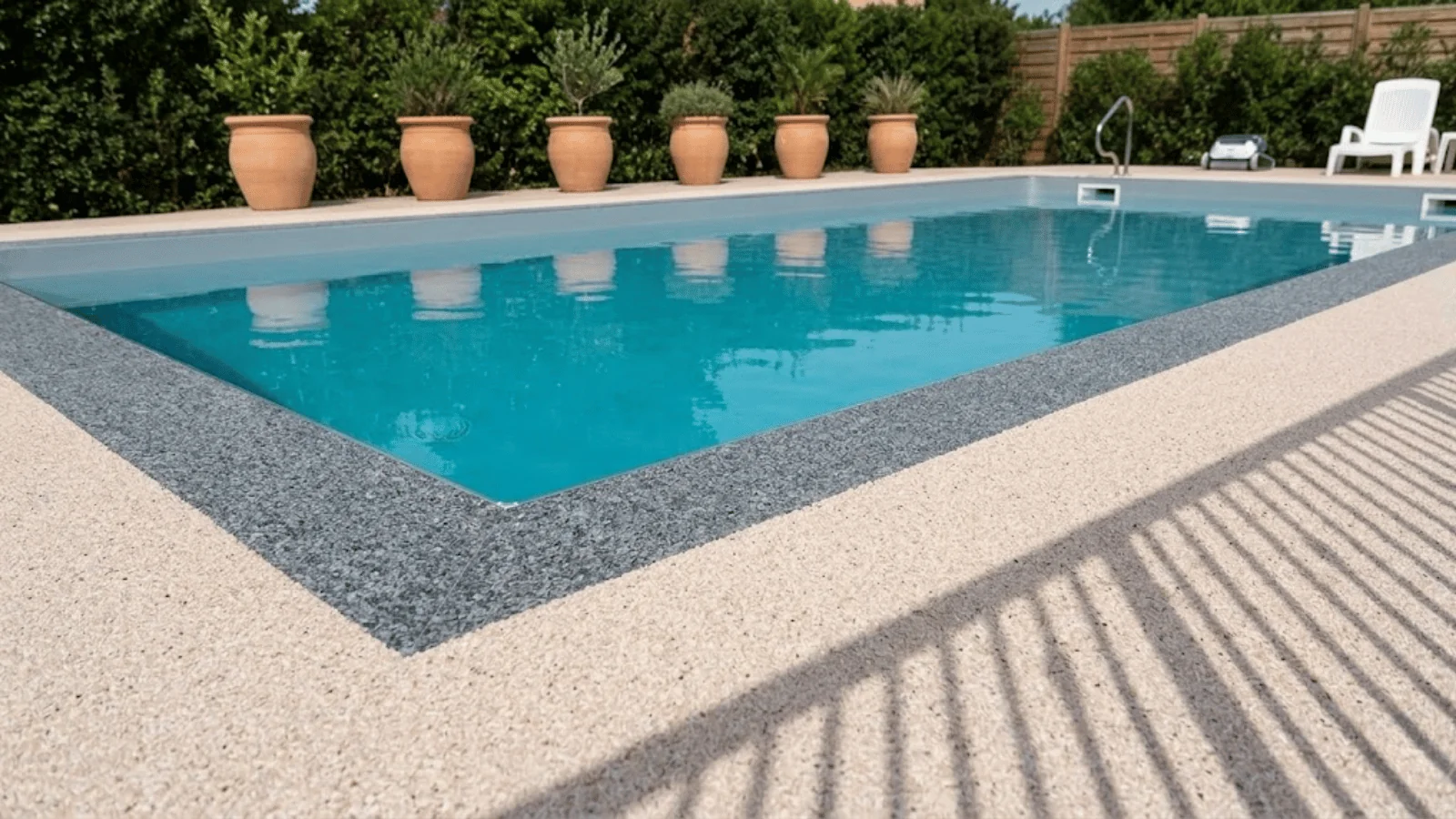
Resin-bound requires routine cleaning and prompt treatment of contamination or organic buildup. Its care needs vary with shade, landscaping, drainage, installation, frequency of use and the cleaning methods applied.
Pavers can also require joint, weed or settlement attention. Concrete and exposed aggregate care varies with the finish, sealer, staining, cracking and site conditions. Compare written maintenance guidance for the exact proposed products and scope.
Whatever material you choose, include a practical care plan. Our maintenance checklist is a useful starting point.
What lifecycle costs are often overlooked?
Many quotes focus on installation only, but lifecycle cost includes cleaning effort, resealing cycles, joint work, cleaning requirements and disruption from future remediation. Compare those items across the expected ownership period rather than using installation price alone.
Ask for practical upkeep expectations in writing: how often should the surface be cleaned, what maintenance events are likely, and what signs indicate early intervention. This makes it easier to compare long-term value across materials rather than relying on initial cost alone.
For a like-for-like comparison, ask each supplier to state the base preparation, drainage work, finish, exclusions and expected care behind the quote.
How does surrounding landscape affect long-term performance?
Landscape context plays a bigger role than many homeowners expect. Heavy leaf drop can increase cleaning demand, nearby garden beds can introduce sediment, and frequent shade can raise moisture retention. These factors influence how quickly surfaces show wear or organic buildup.
Maintenance planning should account for clear edges between planting and paving, accessible cleaning routes and drainage points that remain easy to inspect. The surrounding environment affects every surface system.
Before final selection, walk the full zone from pool edge to boundary paths and list any recurring moisture or debris sources. Addressing those details early makes the scope and care requirements easier to compare.
If your property has mixed sun and shade pockets, consider a material and colour strategy that responds to each zone rather than applying one finish universally. A zone-by-zone plan makes differences in exposure and cleaning demand clearer.
This zone-by-zone approach is especially useful where pool surrounds connect directly to pathways, steps, and entertaining areas with different usage intensity throughout the day.
It also helps future upgrades happen in stages without creating inconsistent wet-use or maintenance expectations across adjoining surfaces.
How do you choose a material for your pool area?
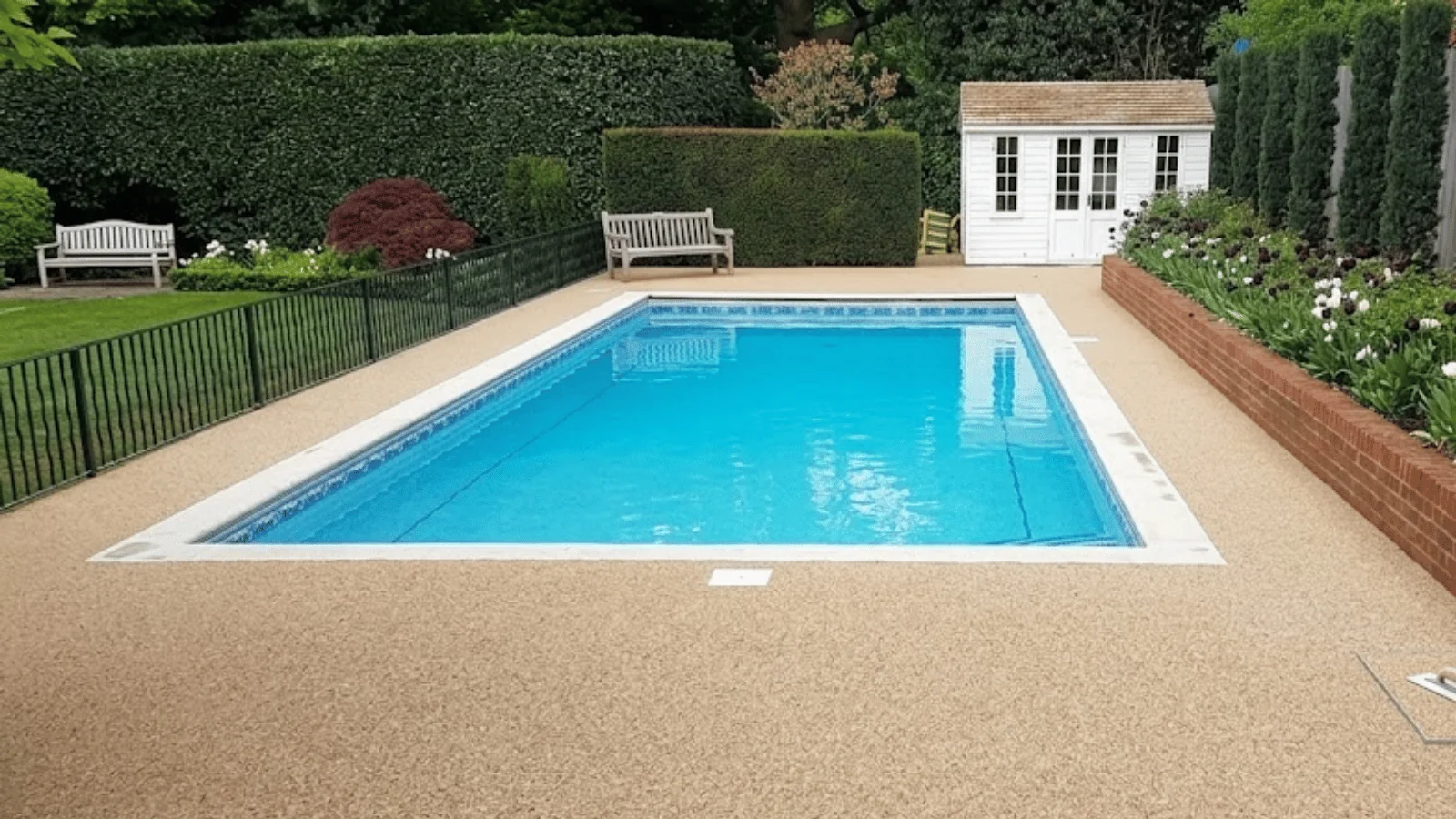
Resin-bound may suit a stable existing base where a continuous natural-aggregate finish is wanted. Pavers, concrete or exposed aggregate may suit different structural, visual or construction requirements. The answer depends on the site and complete quoted scope.
Rank your priorities: wet-use evidence, texture, edges and levels, surface-temperature factors, cleaning requirements and budget. Then compare options against those priorities with site-specific scope detail, not generic brochure claims.
You can also review completed Adelaide examples in the Gorilla Surfaces gallery to evaluate tone and texture in real-world installations.
Frequently Asked Questions
Can one pool-surround material be called safest when wet?
No. Wet-use performance depends on finish texture, slope, drainage, contamination, cleaning and how the area is used. Ask for relevant evidence for the proposed finish rather than relying on a universal material claim.
What affects pool-surround surface temperature in summer?
Colour, material composition, direct sun, shade, weather and time of day all affect surface temperature. Compare physical samples and plan shade for the site; no material should be assumed to be universally cooler underfoot.
How do maintenance needs differ between pavers and resin-bound surfacing?
Both need routine cleaning. Pavers can also need attention at joints or settled units, while resin-bound care depends on contamination, shade, drainage, installation and use. Ask for written care guidance for the exact system being considered.