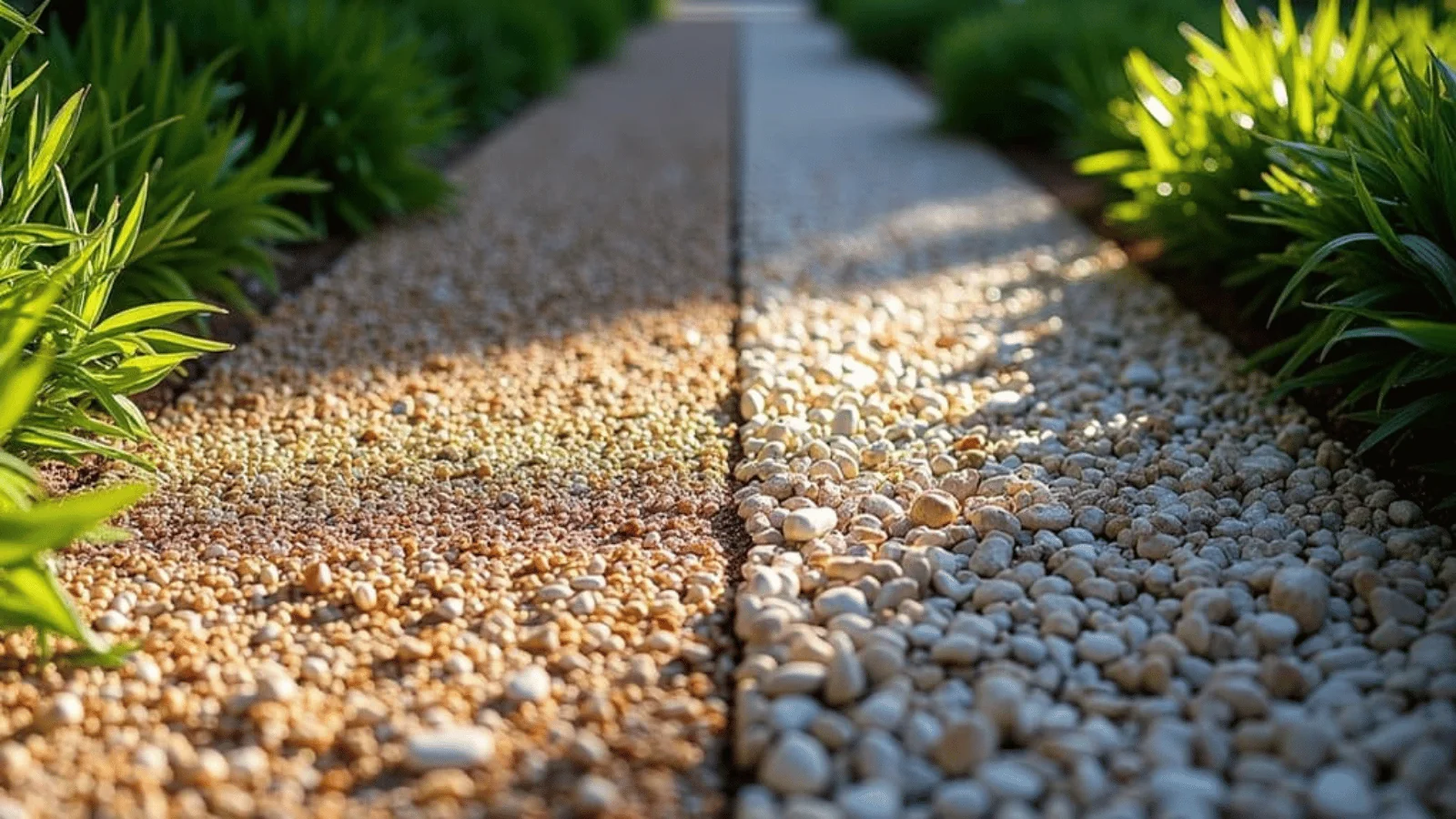
Adelaide homeowners usually start this comparison with one question: which option gives the finish they want with a scope suited to the property? Resin-bound resurfacing and exposed aggregate concrete differ in how they use an existing base, manage surface water and create their final appearance.
Before deciding, it helps to look at your driveway as a whole system: existing base, drainage points, edging, slope, tree coverage, vehicle load, and how much downtime your household can tolerate. A stable, suitable base may be retained for resurfacing; an unstable base or one needing structural replacement falls outside Gorilla Surfaces' resurfacing scope.
This article is written for Adelaide projects where heat, UV exposure, and sudden storm events all impact performance. If you have not reviewed surface scope options yet, start with our driveway resurfacing service overview and then compare the materials below.
How do resin-bound and exposed aggregate differ in appearance?
Resin-bound usually delivers a cleaner, joint-minimised visual finish, while exposed aggregate has a textured concrete look with visible stone pop. In practical terms, resin-bound suits modern facades and detailed edge work, whereas exposed aggregate often suits broader, heavier architectural styles.
The main visual difference is jointing and texture consistency. Resin-bound stone is hand-trowelled to a smooth, continuous-looking finish, which means colour transitions and curves are easier to control. Exposed aggregate relies on concrete pour quality and wash timing, so visual outcome can vary slightly between batches and sections.
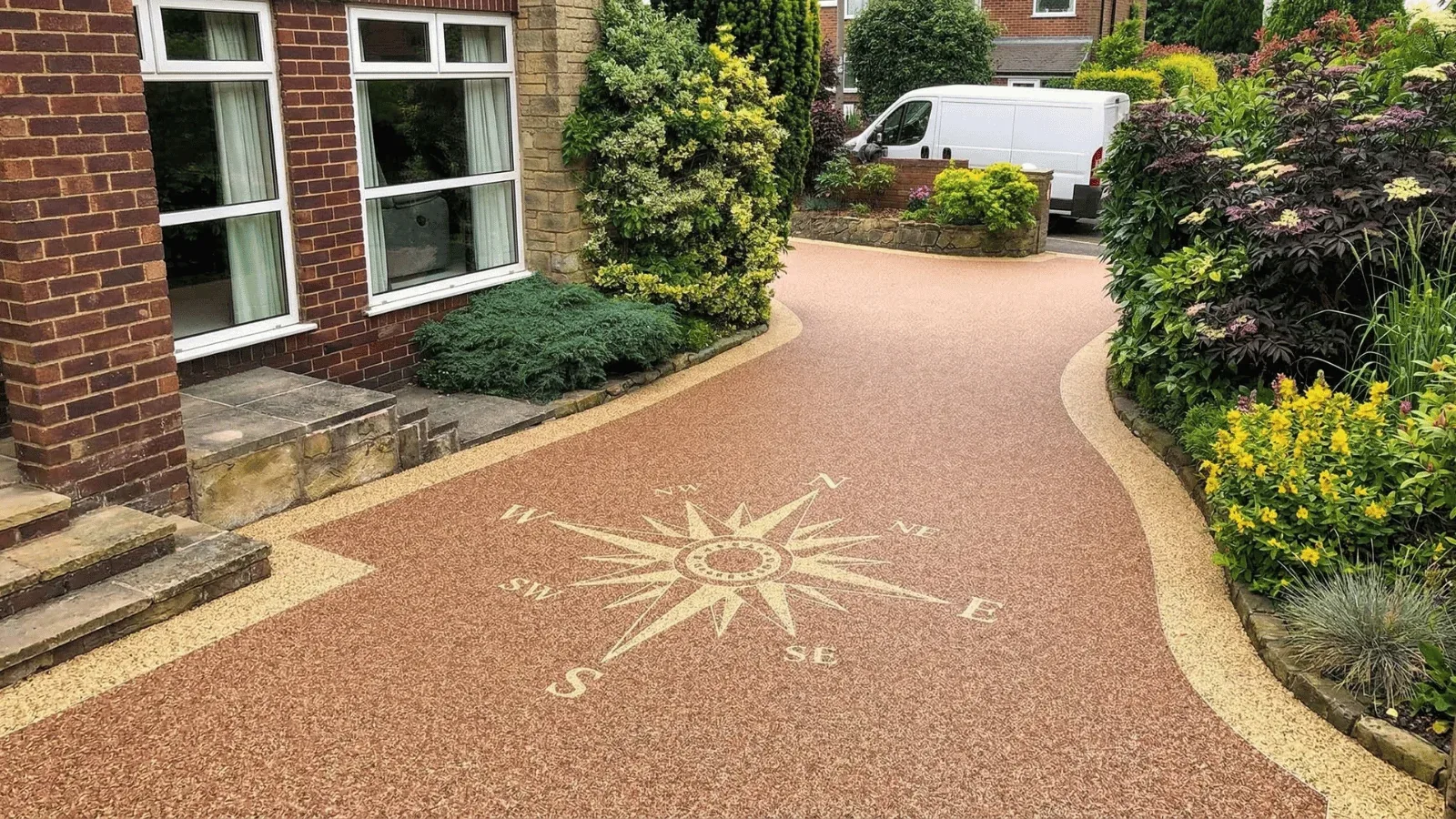
If your driveway meets paths, planter zones, or a garage apron, resin-bound also makes custom borders and inlays easier to integrate without obvious visual breaks. You can see examples in our custom borders and inlays guide and the project gallery.
What affects driveway surface temperature in Adelaide?
Colour, material composition, direct sun, shade, wind, weather and time of day all influence surface temperature. Neither resin-bound nor exposed aggregate should be described as universally cooler underfoot without relevant project-specific evidence.
Resin-bound offers a choice of aggregate blends, with natural variation expected in stone aggregate. Exposed aggregate can also use different aggregate and concrete colours. Compare physical samples alongside the facade, orientation and shade conditions rather than treating colour as a temperature guarantee.
Where barefoot use is relevant, include shade and exposure in the site assessment. Our pool surround resurfacing page explains the additional wet-use and drainage factors considered around pools.
How much does each driveway option cost in Adelaide?
Cost overlap is common, but the bigger difference is where your budget goes. Resin- bound projects often allocate more to preparation and finish control, while exposed aggregate projects frequently carry more concrete and cure-related staging costs. Existing base quality can swing pricing either way.
If the existing slab is stable and suitable, resin-bound may retain it after preparation. Exposed aggregate may instead be part of a new concrete scope. Cracking, movement, drainage, edges, access and removal requirements can change either quote, so a headline square-metre rate is not a like-for-like comparison.
Use this as a practical budget guide before requesting quotes:
| Cost factor | Resin-bound impact | Exposed aggregate impact |
|---|---|---|
| Base condition | May overlay a qualifying stable base after assessment and preparation | May require new pour sections depending on condition |
| Drainage corrections | Porous surface layer; whole-area drainage depends on the base, falls and outlets | Surface runoff depends on falls, outlets and the wider drainage design |
| Downtime | May retain a suitable base; preparation, weather and cure determine timing | Removal, construction, weather and concrete cure determine timing |
| Detailing options | Aggregate blends, borders, curves and selected inlays can be specified | Aggregate, concrete colour, joint layout and edge treatments can be specified |
How do the drainage approaches differ?
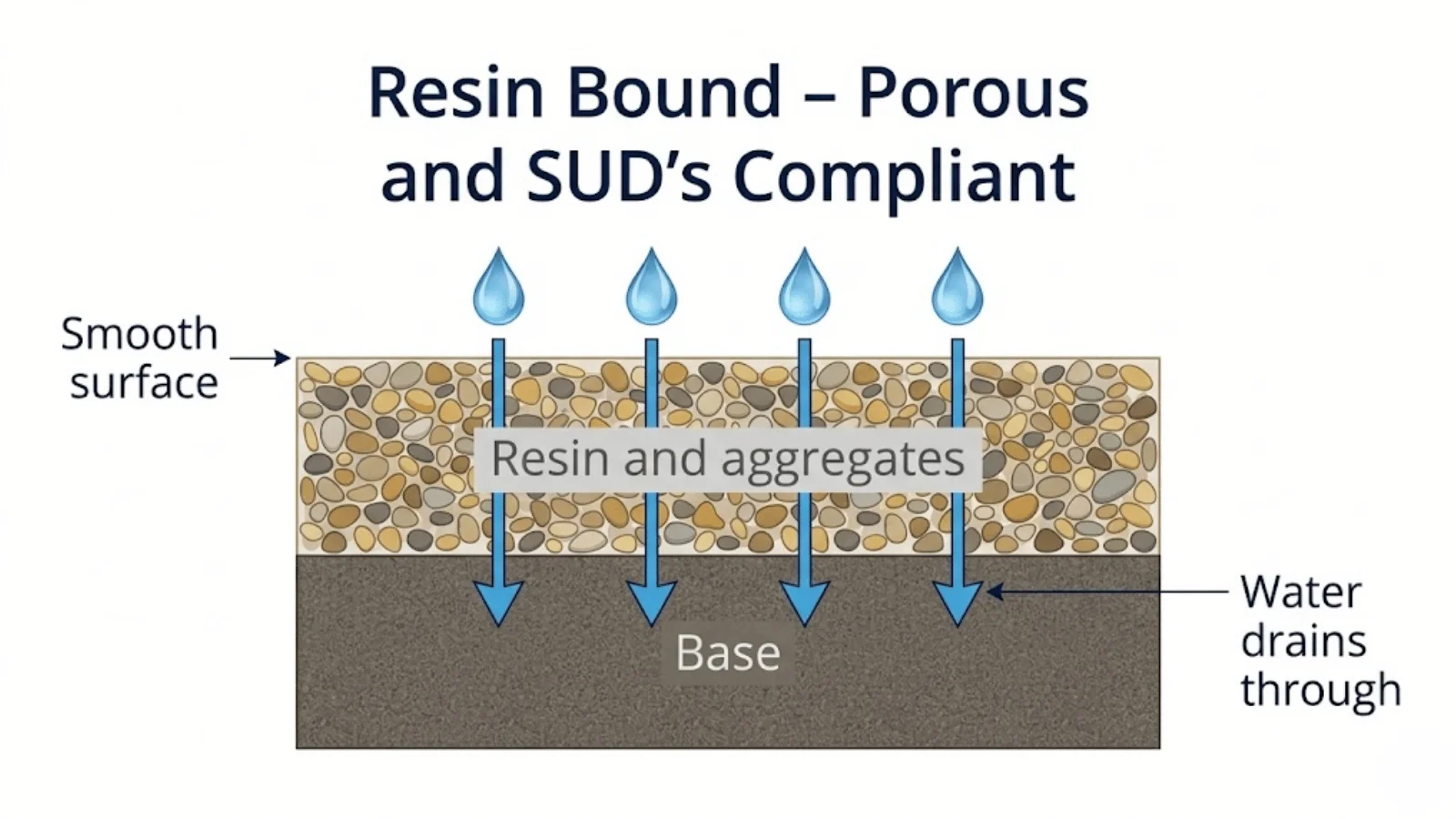
Water can pass through the porous resin-bound surface layer, but whole-area drainage depends on the base or sub-base, falls, outlets and site design. A resin-bound overlay over ordinary concrete does not make the complete construction a permeable system.
Exposed aggregate concrete normally manages water at the surface through falls and outlets. Existing pooling near a garage or low point must be assessed as a site issue; choosing a different finish alone does not correct unsuitable levels or drainage design.
If runoff management is your main concern, also read our permeable pathway runoff guide for practical system boundaries and site considerations.
Do local site conditions change which option may fit?
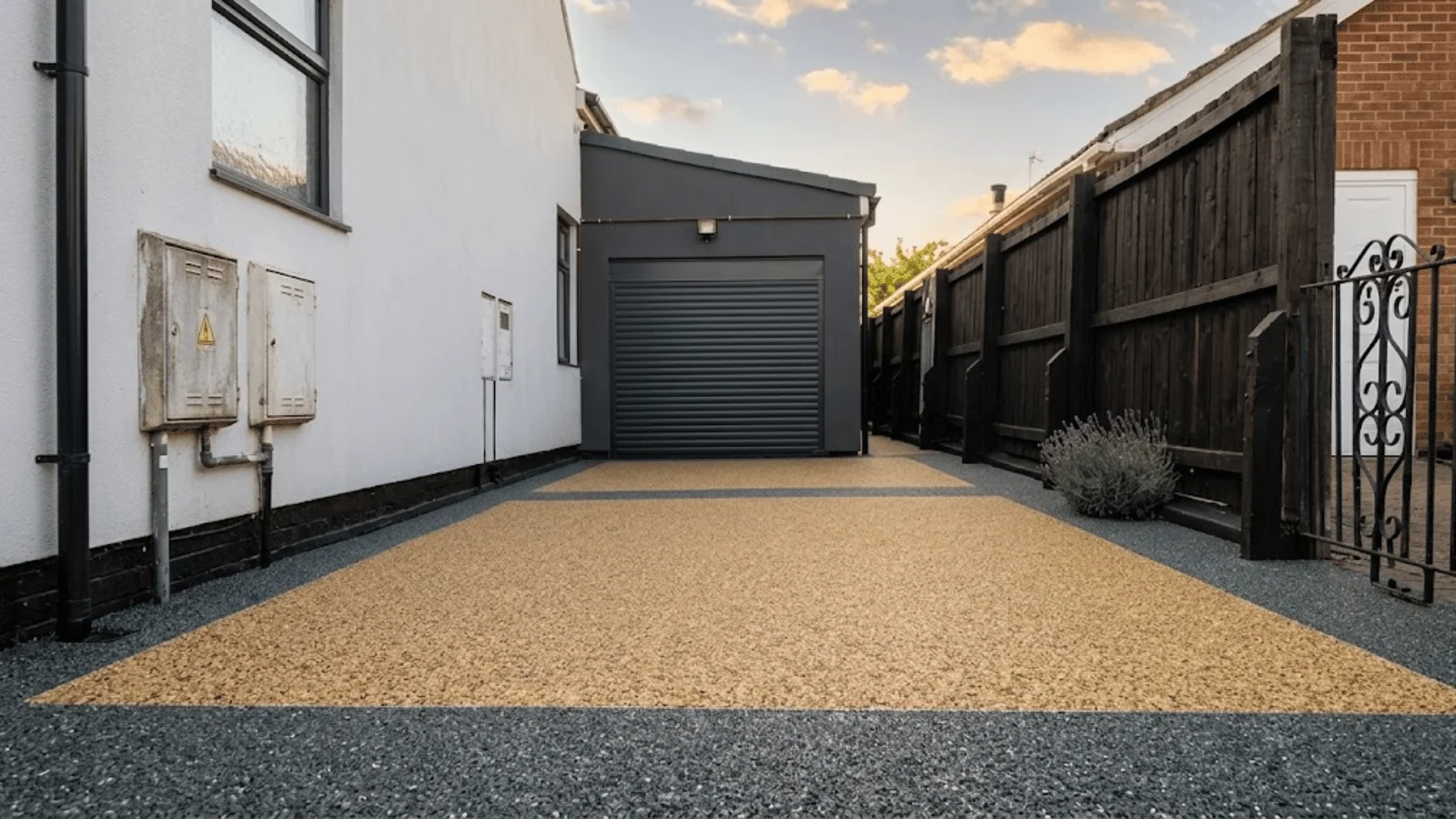
Yes. Block slope, tree coverage and orientation affect surface temperature, drainage and maintenance patterns. The same material can behave differently between heavily shaded foothill sites and full-sun coastal driveways.
In leaf-heavy areas, maintenance accessibility and organic buildup risk matter more. In high-sun areas, exposure and UV stability become bigger considerations. This is why material decisions should be tied to site context, not generic averages.
A site assessment can clarify these trade-offs by relating the proposed scope to the actual block rather than to generic averages.
What maintenance should homeowners expect each year?
Both options need maintenance. Resin-bound care includes routine cleaning and prompt removal of leaf litter, contamination and organic buildup. Frequency depends on shade, drainage, landscaping, traffic and the installation.
Exposed aggregate care varies with its sealer, concrete mix, staining, cracking, traffic and exposure. Ask both suppliers for written cleaning and maintenance guidance for the exact proposed system rather than assuming one has a universally lower workload.
If you want a simple maintenance schedule after handover, use our maintenance checklist article as a baseline and adjust for vehicle load.
What influences service life under vehicle traffic?
Neither option has a universal service-life outcome. Resin-bound depends on base stability, preparation, layer specification, edges, installation, traffic and care. Exposed aggregate depends on base construction, concrete design, reinforcement, jointing, curing, traffic and maintenance.
Driveways are not static. They flex under turning loads, thermal expansion, and edge pressure from repeated parking habits. Weak base or edge conditions can contribute to movement or failure regardless of finish type. That is why the complete construction scope matters alongside surface appearance.
Ask each supplier to document base preparation, edge details, drainage assumptions and intended loading so the comparison reflects the site rather than a lifespan promise.
When might each driveway option fit?
Resin-bound may fit where a stable existing base can be prepared for overlay and a continuous natural-aggregate finish is wanted. Exposed aggregate may fit where a new concrete scope and a textured concrete appearance suit the structural and design brief.
The practical way to decide is to compare both options on the same checklist: preparation scope, downtime, drainage work, surface-temperature factors and expected upkeep. If one quote skips those items, it is not a true comparison. Request line-item clarity so you can evaluate value, not just headline price.
If you are at decision stage, combine this guide with our driveway cost factors breakdown and an on-site inspection to remove guesswork before committing.
Frequently Asked Questions
Is resin-bound cheaper than exposed aggregate in Adelaide?
There is no reliable universal price ranking. Resin-bound may be quoted as resurfacing where an existing base is suitable, while exposed aggregate may form part of a new concrete scope. Compare written quotes with the same preparation, drainage, edges and exclusions.
What affects driveway surface temperature in summer?
Colour, material composition, direct sun, shade, weather and time of day all affect surface temperature. Compare physical samples for the site; neither resin-bound nor exposed aggregate should be assumed to be universally cooler underfoot.
Can resin-bound be installed over old concrete?
It may be suitable where the concrete is stable and can be prepared for overlay. Cracking and movement, drainage, thresholds, edges and access must be assessed before the resurfacing scope is confirmed.