Resin-bonded and resin-bound are often discussed together, but they are not the same surface system. They use related materials, yet they are applied differently and can perform differently over time.
If you are comparing quotes for a resin surface, understanding which system is being proposed helps you compare scope, suitability and expected outcomes more accurately.
Gorilla Surfaces installs resin-bound resurfacing only. Resin-bonded information on this page is provided for education and quote comparison, not as a service offer.
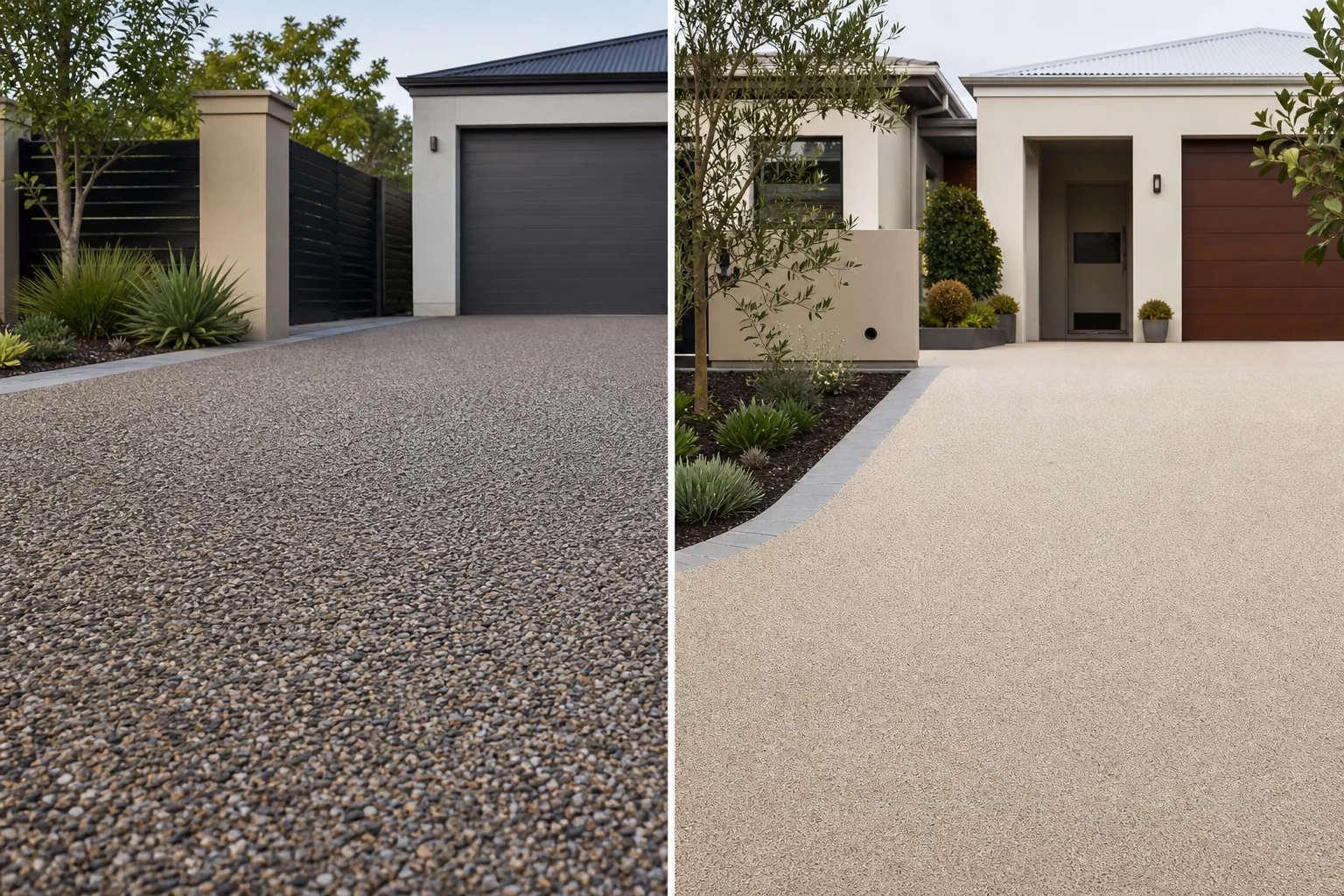
The Plain-English Difference
Resin-bound: aggregate is mixed with resin first, then trowelled onto a prepared base.
Resin-bonded: resin is applied to the base first, then loose aggregate is broadcast on top and bonded into that layer.
From a distance they can look similar. Underfoot feel, drainage behavior and long-term maintenance profile are often where the differences become clearer.
How Each System Is Built
Resin-bound
- Base is assessed and prepared.
- Aggregate and resin are mixed in controlled batches.
- The blend is hand-trowelled to specification.
- After curing, the surface presents a smooth stone-textured matrix.
The resin-bound surface layer is porous. A complete permeable system also requires a suitable porous base, sub-base and drainage design; an overlay over ordinary concrete is not fully permeable.
Resin-bonded
- Existing hard surface is prepared and cleaned.
- Resin is applied to the prepared substrate.
- Loose aggregate is scattered over the resin layer.
- After cure, excess loose stone is removed.
Because the resin layer is applied over an existing hard surface, resin-bonded is generally treated as a non-permeable surface approach that relies on falls and external drainage.
Side-by-Side Comparison
| Feature | Resin-Bound | Resin-Bonded |
|---|---|---|
| Build method | Aggregate mixed with resin before laying | Resin layer first, aggregate broadcast on top |
| Underfoot feel | Smoother stone-textured finish | Typically coarser surface texture |
| Drainage profile | Porous surface layer; whole-system drainage depends on the base and site design | Generally non-permeable, drainage handled by falls and external systems |
| Appearance | Refined, continuous natural stone look | Broadcast-aggregate appearance with a coarser profile |
| Surface texture | Aggregate texture varies with the selected finish; no universal slip classification is claimed | Typically coarser, but wet-use performance still requires product-specific evidence |
| Maintenance profile | Requires routine care based on the site and use | Requires product-specific care based on the site and use |
| Quote-scope question | Scope depends on base suitability, preparation, edges, access and finish | Scope depends on the substrate, preparation, access and selected system |
Porosity and Complete Drainage
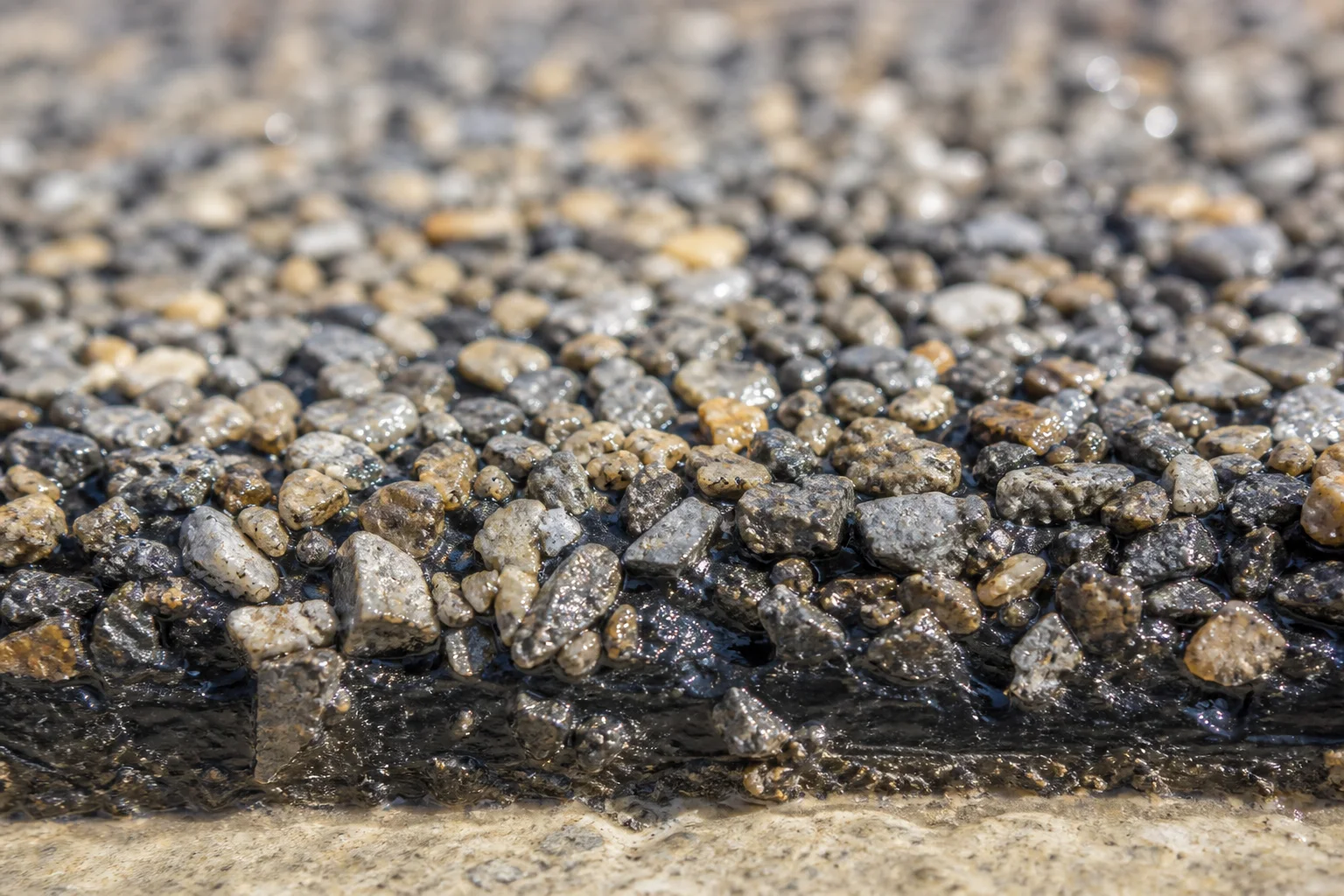
Water can pass through the resin-bound finish. Complete permeability depends on the base, sub-base, falls, outlets and site design; the top layer alone does not make the installation fully permeable.
Resin-bonded is generally treated as a non-porous surface approach that relies on site falls, outlets and surrounding drainage.
Surface Texture and Wet-Use Evidence
Texture differs between systems, but neither should receive a universal non-slip or high-friction claim without relevant product and application evidence.
Wet-use performance also depends on installation, falls, drainage, contamination and maintenance. A specific AS/NZS classification should not be assumed without a relevant report.
Maintenance Expectations
Neither system is maintenance-free. Follow product- and project-specific care guidance; do not assume a universal cleaning schedule or that one system always needs less maintenance.
How to Compare Quote Scope
Costs cannot be compared reliably without equivalent base-preparation, access, edge, drainage and finish scopes. A lower headline rate may not include the same work.
Gorilla Surfaces does not provide resin-bonded installation. Its written quotes cover installed resin-bound resurfacing over a qualifying existing base.
Where Each System Tends to Suit
Resin-bound tends to suit
- Driveways and outdoor areas where a smoother decorative finish is preferred.
- Projects targeting drainage-friendly design with suitable base/drainage build-up.
- Paths, patios and pool surrounds where refined appearance and controlled texture are priorities.
For broader surface decision factors, compare options on resin-bound vs concrete.
Typical resin-bonded use cases
For general educational context only; Gorilla Surfaces does not provide resin-bonded systems.
- Projects where a coarser broadcast-aggregate texture is specified.
- Applications over a suitable hard substrate where porosity is not required.
- Targeted retrofit zones rather than full decorative resurfacing outcomes.
Adelaide and Australian Conditions
UV exposure, seasonal rain events and substrate movement risk all influence long-term outcomes. For either system, substrate suitability, preparation quality and specification are critical.
If drainage or council requirements are relevant, outcomes depend on full design context and site conditions, not on one surface layer alone.
Overlay Suitability Notes
Stable existing concrete or asphalt may qualify for a resin-bound overlay after assessment. Gorilla Surfaces does not construct new bases or install the system directly over dirt.
Stable pavers are considered selectively after both the pavers and supporting base are assessed. Tiled surfaces are higher risk and may not qualify for resurfacing.
Frequently Asked Questions
Are resin-bound and resin-bonded the same?
No. Resin-bound aggregate is mixed with resin before laying, while resin-bonded aggregate is broadcast onto a resin-coated surface. Gorilla Surfaces installs resin-bound resurfacing only.
Which resin surface lasts longer?
There is no universal winner or single lifespan. Service life depends on the selected system, substrate, preparation, installation, traffic, drainage, use and maintenance.
Which resin surface is more permeable?
The resin-bound surface layer is porous, but complete permeability also requires a suitable porous base, sub-base and drainage design. Resin-bonded is generally treated as non-porous.
How soon can a resin-bound surface be used?
Keep people off for at least 24 hours and vehicles off for at least 48 hours, or longer if advised. Temperature, moisture, weather and project conditions can extend curing.
How to Tell What You Have Been Quoted
- Ask whether aggregate is mixed into resin before application or broadcast after resin.
- Ask whether the proposed system is designed as a permeable build-up.
- Ask what the finished texture should feel like underfoot and why that suits your use-case.